

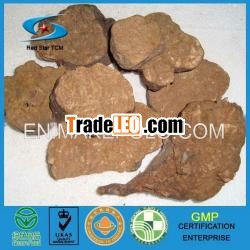
Description:
1. Sliced Fleeceflower Root2. Purgation Chinese Medicine
3. For Oral Administration
4. GMP Certification
5. 10-30g/Day
| Products Name: | Raw Fleeceflower Root Pieces |
| Latin Name: | Fallopia multiflora (Thunb.) Harald. |
| Function: | To reinforce the liver and kidney, replenish blodd and essence, lower cholesterol, prevent and treat atherosclerosis, and promote the development ofnerves and blood cells. |
| Indications: | Anemia, progeria and insomnia. The ancients regarded it as the "thetea to recover one''s youthful vigor" |
| Medical Function: | Anti aging, improving immune system, alleviating serum cholesterol,reversing hardening of arteries, improving bowel movements,stimulating adrenal cortex, regulate epinephrine andnorepenephrine, regulate blood sugar, protecting liver function,improving the development of red blood cells, inhibiting TB,diarrhea, influenza. |
| EdibleMethods: | 1. Drinking after infusing of the Raw Fleeceflower Root Pieces withboiled water. (Dosage: 10-20g) 2. Cooking with the white fungus and red date or the sticky rice.(Dosage: 20-30g) 3. Put a few pieces of Raw Fleeceflower Root into the soup tomake it taste better, and also greasy feeling of thesoup can be removed |
Origin:
Fleeceflower root is the root tuber of the perennial climber Polygonummultiflorum Thunb., of the family Polygonaceae. Native to eastAsia, the plant is grown along the banks of streams and in valleyshrub thickets in China, Japan, Malaysia,etc.
Theplant grows to about 4.5 m high. It is in flower from September toOctober. The flowers are hermaphrodite (have both male and femaleorgans) and are pollinated by insects. The plant can grow insemi-shade (light woodland) or no shade. It requires moistsoil.
Fleeceflower is produced in most parts of China. The root tuber is dug inspring and autumn, preferably from plants 3 - 4 years old, washedclean, sliced and dried in the sun, which is known as rawfleece-flower root. That prepared by steaming with the juice ofblack soybean (till getting brown) and drying (till getting black)in the sun is called prepared fleece-flowerroot.
Alsocalled Maltiflower Knotweed Root, Chinese Knotweed Root, andFlowery Knotweed Root.
Applications:
1. Forblood-deficiency syndrome marked by pale, dizziness, palpitation,irregular menstruation, it is used with herbs for replenishingblood and regulating menstruation, such as Radix AngelicaeSinensis, Radix Rehmanniae Preparata, Colla Corii Asini, RhizomaLigustici Chuanxiong, etc.
2. Fordeficiency of both the liver and kidney and insufficiency ofessence and blood manifested as weakness of the loins and legs,vertigo, blurred vision, insomnia, ammesia, premature grey hair,etc., it is often used with herbs for replenishing the liver adkidney, and enriching essence and blood, such as Semen Cuscutae,Fructus Lycii, Radix Angelicae Sinensis, Radix angelicae Sinensis,Fructus Psoraleae, Radix Achyrant his, Bidentatae,etc.
3. Forscrofula, pyogenic infection and ulcer of skin, it is used withherbs for softening the hard mass and removing scrofula, such asSpica Prunellae, Bulbus Fritillariae Cirrhosae, RadixScrophulariae, etc.
4. Forchronic malaria due to deficiency ofboth qi andblood, it is often used with ginseng, chineseangelica root,tangerine peel, etc., as in Decoction of Fleece Flower Root andGinseng (He Ren Yin).
5. Forconstipation due to deficiency of the blood and dryness of thebowels, it is often used with chinese angelica root, hemp seed,etc.
Cautions onUse:
In casesof loose stool or profuse damp phlegm, fleece flower root shouldnot be prescribed.
Also,people with a tendency to rheumatism, arthritis, gout, kidneystones or hyperacidity should take especial caution if includingthis plant in their diet since it can aggravate theircondition.
Excessivedoses can cause skin rash and numbness of theextremeties.
Althoughno specific mention has been made for this species, there have beenreports that some members of this genus can cause photosensitivityin susceptible people.
Manyspecies also contain oxalic acid (the distinctive lemony flavor ofsorrel) - whilst not toxic this substance can bind up otherminerals making them unavailable to the body and leading to mineraldeficiency. Having said that, a number of common foods such assorrel and rhubarb contain oxalic acid and the leaves of mostmembers of this genus are nutritious and beneficial to eat inmoderate quantities. Cooking the leaves will reduce their contentof oxalic acid.

