

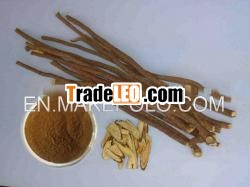
Description:
Benefits of Licorice extract:Antioxidants
Inflammation management
Digestive Health
Licorice extract is obtained from the roots of Glycyrrhiza glabra. Known as‘yastimadhu’ in Ayurveda, it is considered to be more than fiftytimes sweeter than sugar.
The Brown pigment in licorice consists of mainlyGlycyrrhizinic acid which is a pentacyclic triterpenoid derivative ofthe beta-amyrintypeobtained from the hydrolysis of glycyrrhizic acid.
Indovedic offers licorice extract Standardized for a Minimum 20%Glycyrrhizinic acid.
The two major constituents of licorice are glycyrrhizinand flavonoids. Accordingto test tube studies, glycyrrhizin has anti-inflammatory actionsand may inhibit the breakdown of the cortisol produced by the body.Licorice may also have antiviral properties, although this has notbeen proven in human pharmacological studies. Licorice flavonoids,as well as the closely related chalcones, help heal digestive tractcells. They are also potent antioxidants and work to protectliver cells. In test tubes, the flavonoids have been shown tokill Helicobacter pylori, the bacteria that causesmost ulcers andstomach inflammation.
Licorice Extract has found to be safe, well tolerated, highlypromising natural antioxidant and inflammatory compound having awide spectrum of biological functions.
Benefits of Licorice extract:
Antioxidants
Inflammation management
Digestive Health
Respiratory Support Nutrient
Manage sore throat and cold
Applications of Licorice extract:
Licorice is often used as a sweetening or flavoring agent to maskthe bitter taste of other medications.Licoriceis used in combination with other herbs. It is one of the morewidely consumed herbs in the world because not only is it usedmedicinally but also the extract is used to flavor tobacco, chewinggum, confections, soft drinks, liqueurs, ice cream, and bakedgoods. It can also be found as the foaming agent in beers or fireextinguishers and made into a chemical wood pulp, which is pressedinto a board.

