

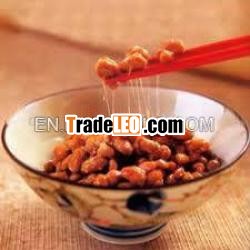
Description:
Natto extract(Nattokinase)Nattokinase 5000-20000FU/G
CAS No.: 26247-79-0
thromboclasis
protect liver
Nattoextract (Nattokinase) is a powerful enzyme extracted and
purified from a traditional Japanese functional food called natto. Natto is a cheese-like product made from boiled or steamed soybeans fermented with beneficial bacteria known as Bacillus subtilis or Bacillus natto.Natto has a characteristically slippery consistency and strong aroma, but it is generally tasteless. Although a variety of soy-based products contain active enzymes, only natto
preparations are known to produce nattokinase.
Natto has been an important part of the Japanese diet for over a century, and is known for its therapeutic effects on vascular and heart disease.
Nattokinase is widely recognized for its potent fibrinolytic properties, and can dissolve dangerous blood clots through a variety of mechanisms.
In this respect, nattokinase acts much like our body’s own naturally-produced fibrin-degrading enzyme known as plasmin. Human plasmin is found in the blood and serves as a defense system against hazardous blood clots associated with cardiovascular disease and stroke.
Nattokinase also shares a similar clot-dissolving mechanism with other commonly-used thrombolytic drugs. However, nattokinase is much cheaper and carries a lower risk of side effects.
While natto may not be readily available in all regions, its active ingredient nattokinase can be found in the form of a dietary supplement. Since traditional natto is an acquired taste, some people prefer the supplemental form of nattokinase, especially since it offers similar benefits.
How is Nattokinase produced?
In ancient times, natto was made by wrapping cooked or boiled soybeans in rice straw and burying the entire bundle underground for a week. Over that time, the natural bacillus in the straw would infuse the soybeans and enhance fermentation. This fermentation process enriched the nutrient content of the soybeans, and also increased the health-promoting effects.
What is Nattokinase used for?
Nattokinase is used for conditions related to the heart and blood vessels, such as atherosclerosis (hardening of the arteries), high blood pressure, high cholesterol, and poor circulation.
Nattokinase is valued in the alternative medicine community as a clot-buster and blood
thinner, and is sometimes recommended as a substitute for daily aspirin therapy.
Nattokinase can dissolve thrombus, lowering blood pressure, lowering blood fat, lowering blood sugar, protecting liver, improving intestinal tract function laxative detoxification efficacy.
Nattokinase is widely applied in the treatment of prevention of various cardiovascular and cerebrovascular diseases, such as: myocardial infarction, cerebral infarction, hypertension, high blood fat, weight loss, beauty.
Function:
1. Nattokinase remains active in the body for 8 to 12 hours. It not only dissolves existing blood clots, but prevents blood coagulation as well and may be a valuable precautionary measure in the prevention of deep vein thrombosis (DVT), which is associated increasingly with long-haul travel.However, research has yet to /confirm/i this. In addition to its anti-clotting factors, Nattokinase has been found to reduce blood pressure. It contains substances that inhibit a naturally-occurring enzyme that causes blood vessels to narrow and blood pressure to rise.
2.Nattokinase is one of several enzymes related to your circulation. Fibrin, the enzyme that causes blood clotting, is usually broken down by another enzyme, plasmin, which aids normal platelet aggregation and circulation.But plasmin production declines with age. Nattokinase helps by facilitating blood flow the same way plasmin does, and also supports your body''s natural production of plasmin.
Dosage: 2000—4000fu per day
The Benefits of Nattokinase on Blood Pressure
Traditionaly in Japan, Natto has been consumed not only for cardiovascular support, but also to lower blood pressure. In recent years, this traditional belief has been /confirm/ied by several clinical trials. In 1995, researchers from Miyazaki Medical College and Kurashiki University of Science and Arts in Japan studied the effects of nattokinase on blood pressure in both animal and human subjects (see below). In addition, the researchers /confirm/ied the presence of inhibitors of angiotensin converting enzyme (ACE), which converts angiotensin I to its active form angiotensin II within the test extract, which consisted of 80% ethanol extract of lyophilized viscous materials of natto. ACE causes blood vessels to narrow and blood pressure to rise - by inhibiting ACE, nattokinase has a lowering effect on blood pressure.
Animal Study
After a single intraperitoneal administration of 400-450 grams of the test extract (equivalent to 25 mg of natto food) into male Wister rats, systolic blood pressure (SBP) significantly decreased from 166 mmHg to 145 24 mmHg in just two hours (p<0.05), and decreased further to 144 27 mmHg in 3 hours (p<0.05). On average, this data represents a 12.7 percent drop in SBP within two hours
How does it work?
Nattokinase decreases the ability of blood to clot. This "thins the blood" and might protect against conditions caused by blood clots such as stroke, heart attack, and others.
Health Benefits of Nattokinase
Nattokinase’s ability to break down fibrin as well as increase blood flow and tissue oxygen levels are the main mechanisms which allow it to reduce the risk of cardiac disease.16
Fibrinolytic and Anti-Thrombotic Activity of Nattokinase
Although the human body produces a number of enzymes that promote the growth of a thrombus (blood clot), the only natural enzyme that works to breaks down the thrombus is called plasmin.6 Since nattokinase is similar in molecular structure to plasmin, it makes sense that it would also have a similar mechanism of action.17However, in addition to having direct fibrinolytic actions (like plasmin),18 nattokinase can also increase the body’s own production of plasmin, as well as several other agents that assist in dissolving blood clots.
Since it takes 4-6 hours for half of the nattokinase taken to be broken down,19 its
therapeutic effects can last even after the patient stops taking nattokinase. This means that the actions of nattokinase last longer than most clot-dissolving drugs available on the market.4 As a result, nattokinase not only dissolves existing clots, but can also help prevent future clots from developing.
Since circulating amounts of both FDP (fibrin degradation products) and EFA (euglobulin fibrinolytic activity) are known to rise when clots are being dissolved, these compounds can be used to monitor nattokinase’s lingering effects. After measuring the EFA and FDP levels, researchers found that the activity of nattokinase can last for 8 to 12 hours.50,48
Cardiovascular Health Benefits
In addition to its ability to fight stroke, nattokinase has a number of other actions that benefit the cardiovascular system.21 For example, nattokinase has been shown to reduce blood pressure by inhibiting the angiotensin II converting enzyme (ACE).22,23 Reductions in blood pressure are well known to decrease your risk of cardiovascular disease.
Nattokinase has also shown promise for the treatment of hyperlipidemia.24 Nattokinase has also been suggested for preventing atherosclerosis and it’s more general form, arteriosclerosis.16, 25, Atherosclerosis is a disorder in which the arterial walls harden and narrow.
Immunomodulatory Effects
Most people who research nattokinase are amazed by the sheer number of potential health benefits it is associated with. For instance, it has been suggested that nattokinase may benefit conditions like diabetes, which often leads to excess platelet aggregation. Nattokinase may also be beneficial for senile dementia, which is characterized by cerebral thrombi formation as well as poor circulation/blood supply.19 Further potential health benefits of nattokinase include reducing chronic migraine, fibromyalgia, chronic fatigue syndrome, Lyme disease, and menstrual cramps.16Some studies even suggest that natto may display activity against tumor growth.

