

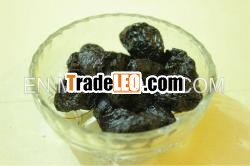
Description:
BLACK PLUMJambul (Syzygium cumini) is an evergreen tropical tree in theflowering plant family Myrtaceae. Jambul is native to Bangladesh,India, Nepal, Pakistan, Sri Lanka, the Philippines, andIndonesia.[citation needed] The name of the fruit is sometimesmistranslated as blackberry, which is a different fruit in anunrelated family.
The tree was introduced to Florida, USA in 1911 by the USDA, and isalso now commonly grown in Suriname and Trinidad and Tobago. InBrazil, known as Jambolão, where it was introduced from Indiaduring Portuguese colonization, it has dispersed spontaneously inthe wild in some places, as its fruits are eagerly sought byvarious native birds such as thrushes, tanagers and the GreatKiskadee. This species is considered an invasive in Hawaii, USA.[1]It is also illegal to grow, plant or transplant in Sanibel,Florida. [2]
Jambul is also known as Jambhul/jambu/jambula/jamboola, Java plum,jamun, jaam/kalojaam, jamblang, jambolan, black plum, Damson plum,Duhat plum, Jambolan plum, or Portuguese plum. Malabar plum mayalso refer to other species of Syzygium. This fruit is calledNeredu Pandu in Telugu and Naaval Pazham in Tamil and Navva Pazhamin Malayalam and Nerale Hannu in Kannada and Jam in Bengali andJamukoli in Oriya and Jambu in Gujarat. Jambul is known as Duhat inthe Tagalog-speaking regions of the Philippines, Lomboy in theCebuano-speaking areas and Inobog in Maguindanao .[3] It is knownas Dhanvah in Maldives. This fruit is called Dhuwet/Juwet inJavanese.
A fairly fast growing species, it can reach heights of up to 30 mand can live more than 100 years. Its dense foliage provides shadeand is grown just for its ornamental value. The wood is strong andis water resistant. Because of this it is used in railway sleepersand to install motors in wells. It is sometimes used to make cheapfurniture and village dwellings though it is relatively hard towork on.
Jambul trees start flowering from March to April. The flowers ofjambul are fragrant and small, about 5 mm in diameter. The fruitsdevelop by May or June and resemble large berries. The fruit isoblong, ovoid, starts green and turns pink to shining crimson blackas it matures. A variant of the tree produces white coloured fruit.The fruit has a combination of sweet, mildly sour and astringentflavour and tends to colour the tongue purple. The seed is alsoused in various alternative healing systems like Ayurveda (tocontrol diabetes, for example.[4][5]), Unani and Chinese medicinefor digestive ailments. The leaves and bark are used forcontrolling blood pressure and gingivitis. Wine and vinegar arealso made from the fruit. It has a high source in vitamin A andvitamin C.[6][7][8]
Jambul has been spread overseas from India by Indian emigrants andat present is common in former tropical British colonies

