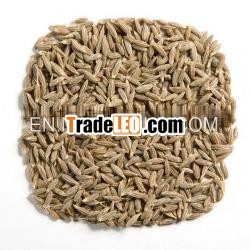
Origins and cultivation: Cumin is a native of theMediterranean region, long cultivated in Europe and in India andChina. Archeological evidences suggest its use in ancient India andthe Roman civilization.
Description: Cumin is asmall, slender branching, annual herb, about 6 inches high. Theleaves are divided into a few thread-like segments, 1/2 to 2 incheslong. The small, white or pink flowers are borne in few-floweredumbels, with thread-like bracts. The fruit is about 1/2 inch long,narrowly oblong and bristly. Uses: Cuminis grown in many parts of the world, including India, China, Egyptand Middle East. It is a very popular spice in Asia and SouthAmerica. Cumin comes second after black pepper as a popularculinary spice and used in beverages, liquors, medicines andperfumery. It resembles caraway in odor and flavor but is ratherbitter and less palatable. It is used in herbal medicine as astimulant and sedative. In the Indian subcontinent, cumin seeds aremixed with coriander seeds to prepare curry powder and also usedwhole or ground to season many dishes. Nutritionalvalue: Cumin seeds are a rich source of minerals(iron, manganese, calcium, phosphorus and potassium), vitamins (A,B, C, E and K) as well as several protein, carbohydrates andfiber. |