

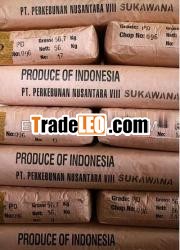
Description:
Black tea is a type of tea that is more oxidized than the oolong,green, and white teas.Black tea is a type of tea that is more oxidized than theoolong, green, and white teas. All four types are made from leavesof the shrub (or small tree) Camellia sinensis. Black teais generally stronger in flavor than the less oxidized teas. Twoprincipal varieties of the species are used – the small-leavedChinese variety plant (C. sinensis subsp.sinensis), used for most other types of teas, and thelarge-leaved Assamese plant (C. sinensis subsp.assamica), which was traditionally mainly used for blacktea, although in recent years some green and white have beenproduced.
Afterthe harvest, the leaves are first withered by blowing airon them. Then black teas are processed in either of two ways,CTC (Crush, Tear, Curl) or orthodox. TheCTC method produces leaves of fannings or dust grades that arecommonly used in tea bags and are processed by machines. Thismethod is efficient and effective for producing a better qualityproduct from medium and lower quality leaves of consistently darkcolor. Orthodox processing is done either by machines or by hand.Hand processing is used for high quality teas. While the methodsemployed in orthodox processing differ by tea type, this style ofprocessing results in the high quality loose tea sought by manyconnoisseurs. The tea leaves are allowed to completelyoxidize.
- Orthodox:The withered tea leaves are heavily rolled either by hand ormechanically through the use of a cylindrical rolling table or arotovane. The rolling table consists of a ridged table-top movingin an eccentric manner to a large hopper of tea leaves, of whichthe leaves are pressed down onto the table-top. The processproduces a mixture of whole and broken leaves, and particles whichare then sorted, oxidized, and dried. The rotorvane (rotovane),created by Ian McTear in 1957 can be used to replicate the orthodoxprocess.[2] The rotovane consisted on an auger pushingwithered tea leaves through a vane cylinder which crushes andevenly cuts the leaves, however the process is more recentlysuperseded by the boruah continuous roller, which consists of aoscillating conical roller around the inside a ridgedcylinder.[2] The rotorvane can consistently duplicatebroken orthodox processed black tea of even sized broken leaves,however it cannot produce whole leaf black tea.[3] Thebroken leaves and particles from the orthodox method can feed intothe CTC method for further processing into fanning or dust gradeteas.
- CTC:"Cut, tear, curl" or "Crush, tear, curl" black teas is a productionmethod developed by William McKercher in 1930. It is consider bysome as a significantly improved method of producing black tea tothe orthodox through the mincing of wither tealeaves.[4] The use of a rotovane to precut the witheredtea is a common preprocessing method prior to feeding into the CTC[2] CTC machines then further shred the leaves from therotavane by processing them through several series ofcontra-rotation rotors with surfaces patterning that cut and tearthe leaves to very fine particles.[2]
- Next,the leaves are oxidized under controlled temperature andhumidity. (This process is also called "fermentation", which is amisnomer since no actual fermentation takes place.) The level ofoxidation determines the quality of the tea. This can be done onthe floor in batches or an a conveyor bed with air flow for properoxidation and temperature control. Since oxidation begins at therolling stage itself, the time between these stages is also acrucial factor in the quality of the tea however fast processing ofthe tea leaves through continuous methods can effectively make thisa separate step.
- Thenthe leaves are dried to arrest the oxidationprocess.
- Finally,the leaves are sorted into grades according totheir sizes (whole leaf, brokens, fannings and dust), usually withthe use of sieves. The tea could be further sub-gradedaccording to other criteria.
- The teais then ready for packaging.
TeaList
CTC Tea
BahButong, Sidamanik, Gunung Dempo, Kondang, Arum, Alkaterie,Neglasari, Parakan Salak, Bukanagara, Tambaksari and etc
Orthodox Tea
Kertowono,Danau Kembar, Marjandi, Tobasari, Bantar, Patuahwattee, Kertamanah,Pasir Malang, Tanahwattee, Pasir Nangka, Malabar, Sedep,Pangheotan, Sinumbra, Sperata, Ciater, Kertasarie, Gunung Rosa, BahBirung Ulu and etc.
Grade:
1.)Dust -CTC Tea (PD, Dust 1, Dust 2, CD, BP1, PF1, Fann, Off Gade,etc).
2.)Leaf -small lelf & big leaf (BOP, BOPF, BT, Fine, OP, OPA,Pekoe, etc.).


