

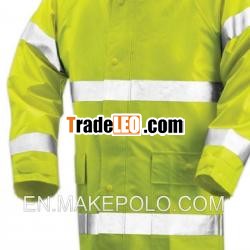
Description:
Designed for Sewing on High Visibility (Hi-Vis) Safety GarmentJacket Workwear Industrial Shirt SweatshirtV-CAN V-REFLEX™
REFLECTIVE MATERIAL Industrial WashReflective Fabric RF-IW5085100
V-REFLEXTM Reflective Material -Industrial Wash Reflective Fabric RF-IW5085100 is designed forsewing on safety clothing requiring industrial laundry and exposed to verycold environment. It is the best choice to make EN 471 andANSI 107 level 3 high visibility safetyclothing.
V-REFLEXTM Reflective Material -Industrial Wash Reflective Fabric RF-IW5085100 is composed of wideangle, exposed retro-reflective lenses bonded to a durable T/Cfabric backing (65% polyester and 35% cotton).
Whenproperly used, V-REFLEXTM Reflective Material -Industrial Wash Reflective Fabric RF-IW5085100 help enhance thevisibility of the wearer in nighttime or low-light conditions whenilluminated by a light source such as headlights, by returning thelight back toward the original source and reaching the automobiledriver’s eye.
Retro-reflectivePerformance
Thecoefficient of retro-reflection (RA incd/lux/m2) is measured by methods traceable to either ofthe following retroreflective intensity testing procedures:
ASTME809-08 and E810-03 (RA)
CIE54.2:2001 (R’)
Thecoefficient of retro-reflection exceed the minimumretro-reflectivity requirements in according to EN 471 and ANSI 107level 2 as bellow-
Observation Entrance Angle
Angle
5o 20o 30o 40o
0.20o(12’) 330 290 180 65
0.33o(20’) 250 200 170 60
1.00o 25 15 12 10
1.50o (1o 30’) 10 7 5 4
RF-IW5085100 initialaverage RA >500
Coefficient of reflection (RA incd/lux/m2) measured at 5.0o entrance angleand 0.20o observation angles on new product is over500.
What isretro-reflection
Retroreflective material vary in the amount oflight they return to the source. The coefficient ofretro-reflection, designated as RA in the specifications, describesthe amount of light returned. The coefficient of retro-reflection is the result of lab measurements at certainspecified entrance and observation angles. By always measuringmaterials at the same angle with the same light source.Retro-reflective material can be compared with oneanother.
What is retro-reflectivematerial
Retroreflective material are characterized by theability to redirect light incident on the material back toward theoriginating light source. This property has led to the wide-spreadused of retro-reflective material for a variety of traffic andpersonal safety uses.
Reflectivefabric is commonly employed in a variety of articles. For example,safety vest, safety coverall, occupational apparel, athletic andcasual wear.
Physical Performance
V-REFLEXTM Reflective Material -Industrial Wash Reflective Fabric RF-IW5085100 meet or exceed thefollowing specifications as noted. All RA values areover 100 cd/lux/m2 measured at 5.0o entranceangle and 0.2o observation angle after tests are carriedout according to following test methods
Retro-reflectivity (Initial) ANSI-ISAE 107-2010Level 2 EN 471-2009Level 2
Industrial Wash :RA >100 50Cycles @ 85 oC (ISO 15797)
Home Wash :RA > 100 100 Cycles @ 60oC (ISO6330)
Dry-Cleaning :RA >100 50 Cycles (ISO 3175)
Cold Fold: RA> 100 -20o (ISO 4675)
Temperature Variation : RA>100 50hours @ 50 oC and 20 hours @ -30 oC
Flexing :RA > 100 7500cycles (ISO7854)
Abrasion :RA > 100 5000Cycles (EN 530)
HeatResistance 5 minuts at 260oC (500 oF) (ISO 17493)
Convective Heat> 100 10 minutes at 140 oC (285oF)
FlameResistance N/A
Retro Reflective Technologies
Glass BeadTechnology
Glass beadreflective technology is over 60 years old. In a micro-glass beadreflective system, when light strikes a bead, it is refracted andreflective.
Refractionis the bending of the light. Refraction is observed when a pencilis dropped into a half filled glass of water, the pencil appearsbent. The retro-reflectivity of glass beads is better explained byexamining the path of light as it enters a single bead. There areactually millions and millions of micro-glass beads acting thisprinciple. Micro-glass beads are embeded on top of resin,thermoplastic, paint, etc to build a so called retro-reflectivelens.
As the light beam enters the bead,it is bent or refracted downward. This beam then shines on the backsurface of the bead, light strikes the back surface of the bead andreturns to its source.
Glass beadtechnology differs from micro-prismatic technology in thatreflective glass beads vary in size and embedment, thereforecreating inconsistency in the reflectivity. This technology returnslight by as much as 30% unless affected by heavy rainfall thatcauses the reflective optics to scatter the light rather thanreflect to the source causing blackouts of the reflective materialuntil it dries again.
Home Wash Guidelines
Homelaundering means using a top or front loading consumer type homewashing machine with a consumer detergent at moderate watertemperature (up to 60 oC , 140 oF). Garmentfinishing such as tumble drying at high temperature can limitgarment life and should be considered as part of the cleaningprocess.
Care and MaintenanceInstructions
important : Test eachapplication according to appropriate care instructions required forthe finished product. Actual life of V-REFLEXTM Reflective Material depends oncleaning methods and wear conditions.
Caution
Washing/cleaning conditions harsher than thoserecommended below could significantly diminish the brilliance ofthe retro-reflective performance and shorten the product’slifetime. Therefore, the instructions must be strictlyfollowed.
• Nopre-soaking.
• Noapplication of high alkaline products (e.g. heavy duty products orstain removal products).
• Noapplication of solvenated detergents or micro-emulsions.
• Noadditional bleaches.
• Do notoverdry. Reflective material temperature should not exceed 90°C atany time during drying.
Home WashingConditions
A colouredclothing wash programme without pre-wash should be used.
Recommendation: Wash temperature range: 0°C to90°C
Max. washtime at highest wash temperature: 12 minutes
Max.programme time: 50 minutes
Detergent:Brand powdered household detergents should be used. Refer to thedetergent manufacturer’s recommendations for dosage in areas ofhigh water hardness and for various degrees of garmentsoiling.
Use oftemperatures lower than 60° C will increase the lifetime of thereflective material.
Actuallifetime will be dependent upon the detergent system and ist dosagelevel.
Loadfactor higher than 65% might lead to enhanced abrasion of theretro-reflective material
Donot use additional bleach
• Nochlorine bleach.
• Nobleaches on oxygene basis (e.g. sodium perboratebleaches).
Do notstore a wash batch even in a low concentration ofbleach.
Drying Conditions
TumbleDryer: Tumble drying should be performed in a commerciallyavailable household dryer using the medium dry setting.
Exhausttemperature should not exceed 90°C.
Do notoverdry. Damp dry only.
AirDrying: Line drying is recommended where possible.
Ironing Conditions
• Usemedium setting, use press cloth.
• Do notapply steam.
Industrial Wash
Washing Conditions
• The washing machine should be a front-loading, open pocketwasher-extractor. Tunnel washing is not recommended.
• Brightly coloured clothing should be washed separately fromnormal coloured work wear.
• The wash process should be based on a pre- and main-washfollowed by a third bath, or a cooldown and 3-4 rinse cycles.Extended rinsing is recommended to completely remove all detergentresidues
• Load factor should not exceed65%, with the wash water ratio of 1:6 and the rinse water ratio of1:8.
Wash temperature should not exceed60°C.
Total time of the pre- andmain-wash bath should not exceed 20 minutes.
Detergent: Low- to- mediumalkaline, high-surfactant detergents are preferred.
• The detergent should not containfree sodium or potassium hydroxide.
Controlled detergent dosage shouldgive actual wash lye concentration not exceeding those detailedbelow.
Parameter Recommended Maximum
pH- value 10.0 to 10.5 ≤ 11.0
Active Alkalinity ≤ 450 mg/l ≤ 600mg/l
Na2O sodium oxide
Sour: The washload should be effectively soured achieving a pH-value of 5.5 - 6.5in the fi nal rinse.
(Alkalinity titration againstphenolphthalein endpoint, without BaCl2 addition).
Detergent systems with a highalkaline strength, containing organic solvents or free sodium /potassium hydroxide should not be used.
Detergent systems and sour shouldnot contain any oxidising chemicals, (e.g. chlorinebleach).
Use of a lower pH and activealkalinity will increase the lifetime of the refl ective fabric.Actual lifetime will be dependent upon the detergent system and itsdosage level.
No chlorine bleach.
Do not store a wash batch even in a low concentration ofbleach.
Drying Conditions
Tumble dryer
• Load ratio: 1:25.
• Inlet temperature should not exceed 140°C.
• The drying process must be controlled to ensure that theexhaust temperature does not exceed 90°C.
• The drying process should be continued until the load is dampdry.
Tunnel finishing is not recommended.
Do not overdry.
Reflective fabric temperature should not exceed 90°C at any timeduring drying.
V-CAN V-REFLEX™
REFLECTIVE MATERIAL Industrial WashReflective Fabric RF-IW5085100

