

Description:
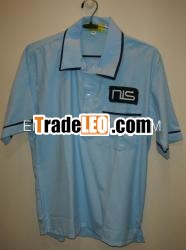
Half sleeve shirt Made from 100% cotton fabric Collar typeCustomization can done.T shirt
Available in allcolors
Available in Differentsizes
Cotton fabric is Ecofriendly &bio-degradeable
T Shirt can customized in size & color withcustomized brand as per customer demand
Customization can done either by Print embroidery , labels , buttons etc
T Shirts are made from Hgh quality Rawmaterial
Highly durablestitches
All inside cut ends are Interlocked by 3thread overlock Machine
Used Hiquality fusing in Collar , Cuffs &Button Palcket
Raw Material Used in producing theset shirts
100%cotton fabric
Two &three ply thread for stitching& all locking seams
Button
Fusingfo Collar , Logo , cuffs & button placket
PackagingMaterial
PolyPacket for packing
Clips
Boardinsert
Collarinsert
BOPPBrown tape for Box sealing
PP strapfor straping of cartons
7 Plycorrugated box
Printlabels to put on packed cartons
MACHINERY USED IN MANUFACTURING TSHIRT
SEWING MACHINE
FUSING MACHINE
IRON
INTERLOCKMACHINE
BUTTON ATTACHINGMACHINE
BUTTON HOLING MACHNE
SCISSOR
CUTTING MACHINE
THREAD TRIMMINGMACHINE
Payment:
T/T , 30% deposit before production, thenbalance before delivery
Any other condition can negotiated againstdiscussion
Bank details we provide you ondemand
SampleCharge:
1)Samplemaking charge is according to design
2)whethersample charge is refundable or not depends on Volume oforder
3)SampleDevelopment time is 10 to 12 days.
FAQ :
1.Q:Are you afactory or trading company?
A:We are afactory.
2.Q:Where is your factory located?How can I visit there?
A: Our factory islocated in Kolkata City, West bengal, India, about 20 km away fromKolkata International Airport .
All our clients,from home or abroad, are warmly welcome to visit us!
3.Q:What isthe material of your products?
A: The materialis Cotton , Poly cotton , Polyester , Poly viscose etcetc
4.Q:How can Iget some samples?
A: We are honoredto offer you samples.
Plain sample No chargeonly shipping you have to arrange
Customized sample withlogo chargeable shipping you have toarrange
5.Q:How doesyour factory do regarding quality control?
A: Quality ispriority. Inspection people always attach great importance toquality controlling from the very beginning to the veryend.
What is Cotton
Cottonis a soft,fluffy staple fiber that growsin a boll, or protectivecapsule, around the seeds of cotton plants of the genusGossypium. The fiberis almost pure cellulose.Under natural condition, the cotton balls will tend to increase thedispersion of the seeds.
The plantis a shrub native to tropicaland subtropical regions around the world, including the Americas,Africa, and India. The greatest diversity of wild cotton species isfound in Mexico, followed by Australia and Africa.[1] Cotton was independentlydomesticated in the Old and New Worlds. The English name derivesfrom the Arabic (al) qutn which began to be used circa1400 CE.[2] TheSpanish word, "algodón", is likewise derived from theArabic.
The fiberis most often spun into yarnor thread and used to make a soft, breathable textile. The use of cotton for fabric isknown to date to prehistoric times; fragments of cotton fabricdated from 5000 BCE have beenexcavated in Mexico and the Indus Valley Civilization (modern dayPakistan). Although cultivated since antiquity, it was theinvention of the cotton ginthat so lowered the cost of production that led to its widespreaduse, and it is the most widely used natural fiber cloth in clothingtoday.
Currentestimates for world production are about 25 million tonnes annually, accounting for 2.5% ofthe world''s arable land. China is the world''s largest producer ofcotton, but most of this is used domestically. The United Stateshas been the largest exporter for many years.[3]
How can cotton fabric produce
Cotton is harvested around six to seven months after it is plantedand must then go through a number of different processes before itbecomes a fabric. The cotton producing process has been modernizedwith computers and machines to increase speed and efficiency in thecotton industry.
Ginning
Producing cotton fabric begins in the cotton fields when the cropis harvested. Ginning is conducted by machine in the cotton fieldwith the fibers of cotton separated from the seed pods and stickyseeds that they are often attached to. The cotton fibers are thendried and baled into large bags and transported to the textilemill.
Spinning
Spinning begins with the automated opening of cotton bails followedby the blending of a variety of fibers from different bales to makea uniform blend of cotton. The cotton fibers are then passedthrough a machine called a carding machine that cleans the cottonand creates a thin web of fibers. The automation of cardingmachines allows the processing of over a hundred pounds of cottonper hour. The thin web of fibers is formed into a thicker blend offibers in a funnel-shaped machine called a trumpet to produce whatis called a sliver of cotton. Up to eight of these rope-likeslivers are combined in a drawing machine to produce a blend ofcotton that is the required thickness or count for the type offabric to be produced.
Weaving
The cotton is wound tightly onto bobbins or tubes to begin theweaving process. Two yarns wound onto bobbins are placed onto aweaving machine to move in different directions called weft andwarp. These two yarns are crossed in succession to create a pieceof fabric.
Treatments
The woven piece of cotton can next go through a number oftreatments to improve the quality of the fabric. Not all pieces ofcotton go through every process due to quality and costrestrictions. Some of the treatments cotton can go through includescouring, where a specific area of the fabric is cleaned. Bleachingbrightens and lightens the fabric, while dying adds color to thecotton fabric.
Finishing
The quality of the fabric at the finishing stage is improved withthe addition of chemicals and other agents. For example, cotton canbe treated with finishing chemicals including sun-protecting agentsto give the fabric a UV protection rating.

