

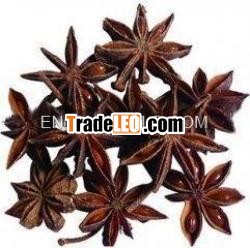
Description:
Aniseed oilBotanical Name: Illicium verum
Common Method of Extraction: Steam Distilled
Color: Pale Yellow
Consistency: Thin
Synonyms: Aniseed oil
BotanicalName: Illiciumverum Common Methodof Extraction: Steam Distilled Color:Pale Yellow Consistency:Thin PerfumeryNote: Middle Strength ofInitial Aroma: Strong |
The oil is of medium viscosity and will solidify at lowtemperatures and it may need to be hand-warmed before use.
Origin
Aniseed originated from the Middle East and is now cultivated inEurope, USA and North Africa. It is an annual herb, about 80 cm (2feet) high with delicate feathery leaves, tiny white flowers andgrayish-brown seeds.
Aniseed oil was revered by ancient civilizations, especially bythe Romans, Egyptians and Greeks. The Romans used it in a spicycake know as ''mustaceus'', the Egyptians used it in bread, whilethe Greeks used it for its calming influence on the digestivetract.
Aniseed is used in liqueurs and cordials, toothpastes andmouthwashes. In India it is used as a breath sweetener and inTurkey, a popular alcoholic drink called ''raki '' is made from theseeds.
Extraction
The oil is extracted by steam distillation from the dried ripefruit and seeds.
Chemical composition
The essential oil includes the following chemical compounds;a-pinene, camphene, b-pinene, linalool, cis-anethole,trans-anethole, safrole, anisaldehyde and acetoanisole.
Precautions
Aniseed oil is a very potent and the anethole contained in itcan cause dermatitis in some individuals. It is best avoided inproblem skin conditions. In large doses it can also slow down thecirculation and can cause cerebral congestion.
It must be avoided during pregnancy.
Therapeutic properties
The therapeutic properties of aniseed oil are antiseptic,antispasmodic, carminative, diuretic, expectorant, stimulant,galactagogue, stomachic, insecticide, laxative andparasiticide.
Uses
Aniseed oil can be useful in the treatment of muscular aches andpains, rheumatism, bronchitis, whooping cough, colic, cramp,flatulence, indigestion, catarrh and hangovers.

