

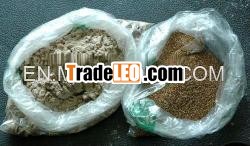
Description:
teff flourTeff Flour Ethiopia
Health Benefits of Teff
Teff leads all the grains – by awide margin – in its calcium content, with a cup of cooked teffoffering 123 mg, about the same amount of calcium as in a half-cupof cooked spinach. It’s also an excellent source of vitamin C, anutrient not commonly found in grains.
Teff was long believed to be highin iron, but more recent tests have shown that its iron contentcomes from soil mixed with the grain after it’s been threshed onthe ground – the grain itself is not unusually high in iron.
Teff is, however, high inresistant starch, a newly-discovered type of dietary fiber that canbenefit blood-sugar management, weight control, and colon health.It’s estimated that 20-40% of the carbohydrates in teff areresistant starches. A gluten-free grain with a mild flavor, teff isa healthy and versatile ingredient for many gluten-freeproducts.
Since teff’s bran and germ makeup a large percentage of the tiny grain, and it’s too small toprocess, teff is always eaten in its whole form. It’s beenestimated that Ethiopians get about two-thirds of their dietaryprotein from teff. Many of Ethiopia’s famed long-distancerunners attribute their energy and health to teff.
Cooking Teff
In Ethiopia, teff is usuallyground into flour and fermented to make the spongy, sourdough breadknown as injera. As anyone knows who has eaten at anEthiopian restaurant anywhere in the world, injera is used as an edible serving plate. Foodis piled on a large round of injera on a tray inthe middle of the table and different foods are served directlyonto the injera. The diners eat by tearing off bitsof injera, and rolling the food inside. Ethiopians also use teff to make porridge and for alcoholicbeverages,including tella and katikala.
Today, teff is moving way beyondits traditional uses. It’s an ingredient in pancakes, snacks,breads, cereals and many other products, especially those createdfor the gluten-free market. You can also buy teff wraps.
White or ivory teff has themildest flavor, with darker varities having an earthier taste.Those who have only tasted teff in injera assume it has a sourtaste, but when it is not fermented (made into a sourdough), teffhas a sweet and light flavor.
Teff is anancient and intriguing grain, tiny in size yet packed withnutrition. It is simple to prepare and similar to millet or quinoain cooking. Teff is a great addition to your diet for nutrition,taste, and variety.
Teff isnative to Ethiopia where it accounts for one quarter of the totalcereal production. Not a newcomer, it is believed that tefforiginated in Ethiopia between 4000 BC and 1000 BC. Although it hasbeen used in Northeast Africa for centuries, teff only became knownin other parts of the world in the late 20th century when farmersbegan to cultivate it in Australia and the Central UnitedStates.
A growingdemand for teff has made it more readily available in NorthAmerica. It can usually be found in health food stores either inthe grain form or ground into flour.
There are afew different varieties of teff that vary in color from light todark. White teff has a chestnut-like flavor while darker varietiesare more earthy in flavor with a slight hazelnut taste.Historically, white teff has been the most popular (and leastwidely available) variety. Perhaps due to its relative scarcity,historically white teff was regarded as a status symbol. Morecommon is red teff. Red teff is higher in iron and has been risingin popularity in recent years.
Health Benefits of Teff:
Teff ispacked with nutrition. It is higher in protein than wheat and has ahigh concentration of a wide variety of nutrients, includingcalcium, thiamin and iron. The iron from teff is easily absorbed bythe body.
Since thegrains are so small, the bulk of the grain is germ and brand. It isvery high in fiber and is thought to benefit people with diabetesas it helps control blood sugar levels. Teff contains no glutenwhich makes it a suitable grain for celiacs or people with wheatsensitivities. Due to its nutritional content and energy enhancingproperties, it has also gained favor with athletes.
A cup ofcooked teff contains 387 mg of calcium which is 40% of the U.S.recommended daily allowance (USRDA).
Teff has twice as much iron as both wheat andbarley.
How Is Teff Flour and Grain Used?
TeffFlour:
The teffgrain is ground into flour and can be used as a substitute in mostbaking for all or part of the wheat flour.
Teffwould not work well on its own in baking that depends on gluten forits structure (such as yeast-risen bread).
InEthiopia, teff is fermented and used to make injera, a traditionalsourdough-type flatbread.
How to cook withTeff Flour: Theproperties are somewhat different than wheat flour (no gluten) sostart off start off by substituting about 25% of the wheat flour ina recipe with teff flour.
TeffGrain:
Uncookedteff grains can be used in cooking and baking in place of othertypes of small grains, nuts or seeds.
Becauseof its small size, make sure to use a smaller amount of teff whensubstituting. For example, use 1/2 cup of teff grain for 1 cup ofsesame seeds.
Teff canalso be used as a thickener in soups, gravies and stews.
Teff isoften cooked as a porridge and when cooked, its stickiness allowsit to easily be formed into cakes (polenta-like).
How to cook with TeffGrains: Place 1/2 cup teff grains, 2 cups water, and 1/4teaspoon of salt in a saucepan. Bring to a boil, reduce the heatand simmer for about 15-20 minutes or until water is absorbed.Remove it from the heat and let it stand for about five minutes.Season with butter, salt and herbs or a sweetener such as maplesyrup.
Teff Trivia:
Teff is oneof the smallest grains in the world. It measures 1/32 of an inch indiameter.
The name,“teff” is derived from the *Amharic “teffa” which translates aslost. Due to its tiny size, teff can easily be lost if dropped!
*Semitic language spoken in North CentralEthiopia
150 teffgrains are equal in size to one kernel of wheat.
Teff is alsocalled lovegrass or bunchgrass. Eragrostis tef (one variety ofteff) is derived from the Greek eros (love)and grostis (grass).
In Ethiopia,teff is grown as forage for cattle and also used in adobeconstruction.
Teff is usedto make home brewed alcohol.
1 pound ofteff can produce up to 1 ton of grain in as little as 12weeks.
3000 grainsof teff weighs only 1 gram.


