

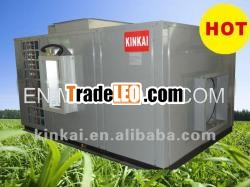
Description:
1. heat pump dryer running cost just as 40% of oil dryer, 50% ofcoal burning boiler, 30% of electric boiler;2. Max temp: 80C;
1. heat pumpdryer running cost just as 40% of oil dryer, 50% of coal burningboiler, 30% of electric boiler;
2. Max temp: 80C;
3. during drying, the material does not craze,does not distortions, nondiscolouring, never degenerate,non-oxidize, drying completely, with good Rehydration, keepnutrient content;
4. energy saving and enironmentalprotection.
5.Conventionally, materials aredried either in the field (sun drying) or using
high temperature dryers (electric,gas fired, etc.). Successful outdoor drying
depends upon good weather andindeterminate weather can render a product
worthless. High temperature dryingcan damage the nutrient content and impart an
unpleasant smell to the driedproduct.
Specialty crops such as ginseng,herbs, echinacea, etc.,
need to be dried at low temperatures(30 - 45Celsius degree) for product quality
optimization. This is an importantconsideration as they have a relatively high
commercial value. Heating ambient airto use for drying, although a simple
cost-effective procedure, is oflimited application, particularly at higher
ambient air relative humiditiesbecause of the low allowable maximum temperature
conditions. Under high ambient moistair conditions, it may not even be possible
to dry the material by conventionalmeans. High temperature drying deteriorates
the material structure and can renderit unsuitable for further use. Low
temperature drying of specialty cropsreduces the risk of loss in nutrient
content and damage to physicalproperties. Drying system incorporating a
dehumidification cycle have beendeveloped that both conserve energy and handle
the material gently. The dryeroperates using a heat pump where both sensible
and latent heats are recovered fromthe exhaust air. The heat is then recycled
back through the dryer by heating theair entering the dryer. The heat pump
drying system is a combination of twosub-systems: a heat pump and a
dryer.
The heat pump operates according to abasic air
conditioning cycle involving fourmain components: the evaporator, the
compressor, the condenser and theexpansion valve.
The working fluid (refrigerant) atlow pressure is
vaporized in the evaporator by heatdrawn from the dryer exhaust air. The
compressor raises the enthalpy of theworking fluid of the heat pump and
discharges it as superheated vapor athigh-pressure. Heat is removed from the
working fluid and returned to theprocess air at the condenser. The working
fluid is then throttled to thelow-pressure line (using an expansion valve) and
enters the evaporator to complete thecycle.
In the dryer system, hot and dry airat the exit of
condenser is allowed to pass throughthe drying chamber where it gains latent
heat from the material. The humid airat dryer exit then passes through the
evaporator where condensation ofmoisture occurs as the air goes below dew point
temperature.
A performance study of a heat pumpdryer system is
required to fully understand itsoperating characteristics based on different
materials to be dried. To accomplishthis objective, the project was divided
into three tasks (steps). Task A isconcerned with the design and construction
of a prototype heat pump dryersystem. Task B involves field-testing of a
prototype system using specialtycrops or material with similar characteristics.
Finally, task C is to develop acomprehensive computer model using the
fundamentals of thermodynamics for aheat pump dryer system and to determine its
accuracy compared to experimentalresults.

