

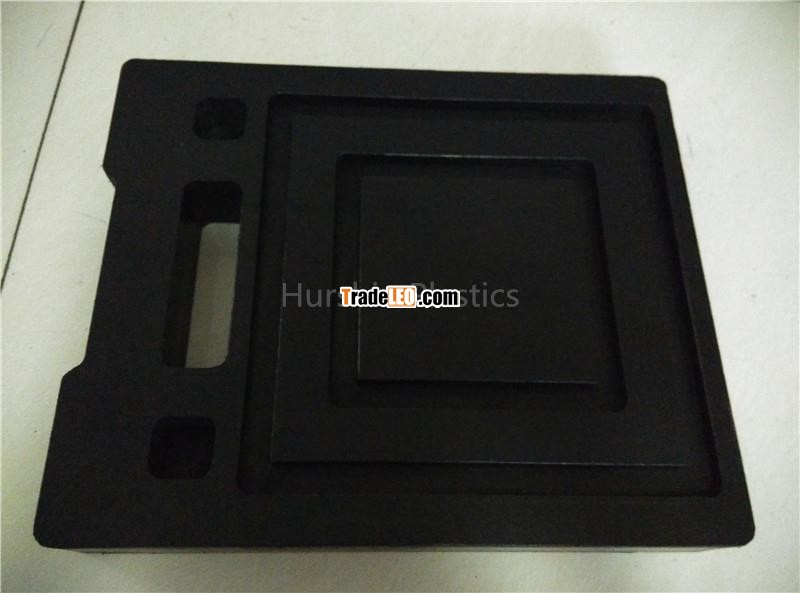
Brand:Hurshin
Model:HS-201603010
Hurshin plastics provide all the support for your rough cranes outriggers.
We offer a wide scope of plastic outrigger pads for rough cranes. We are experienced making any size or thickness of outrigger pads. We have square pads as well as round pads. their thickness can range from 4-1/8" up to 12-1/2". Hurshin plastic outrigger pads can be equipped with simple but functional cable or rope handles.
To ensure the safety of your crew is Hurshin plastics' number one priority. Listed below are the measures needed to protect your crew from injury as well as guidance on training, selecting materials to ensure your rough crane outrigger is set up properly.
Knowing your crane has safety features is not enough. You also need to know how to safely use your rough cranes.
Terms:
Grounding conditions means the ability of the underlying surface to support your rough cranes.
Supporting materials means outrigger pads, blocking, mats, cribbing or other devices.
Blocking generally provides a foundation for heavy loads such as rough crane outriggers.
Cribbing is used when a heavy load must be supported at a level greater than blocking can provide.
Training:
Rough crane crew must be trained and qualified to use outrigger pads, cribbing and blocking.
Selecting Material:
Material must be strong enough to handle heavy weight loaded by your rough crane outrigger.
Material don't crack, deform, rot, bend, splint.
Select material that is wider than your crane outrigger.
Material must be thick, wide and long enough to prevent shifting, toppling or excessive settlement of the load from your rough crane outrigger.
Material must be resistant to oil, grease or debris and kept dry to avoid slippage.
Personal Protective Equipment (PPE):
Crew in charge of handling outrigger pads, cribbing and blocking should wear steel-toed boots, gloves and eye protection.
Use of crane outrigger pads:
The pads must be placed on a firm level base or grounding to properly spread the weight of the load from your rough cranes.
Clear any debris under the outrigger pads which may prevent it from resting firmly on the ground or surface.
Place the pads directly beneath the rough crane outrigger and stack them to avoid slipping.
Inspect your outrigger pads from time to time before every operation for settling, slippage, cracking, bending and crushing.
General Calculations to Determine the Correct Pad Size:
Take the maximum lifting capacity in tons of the unit such as 50 tons, divide that by 5 = 10 sq. ft. of cribbing or blocking
Take the square footage of the cranes floats and multiply by 3. Such as a 2×2 float = 4 sq. ft. Take 4 sq. ft. x 3 = 12 sq. ft. of cribbing or blocking


