

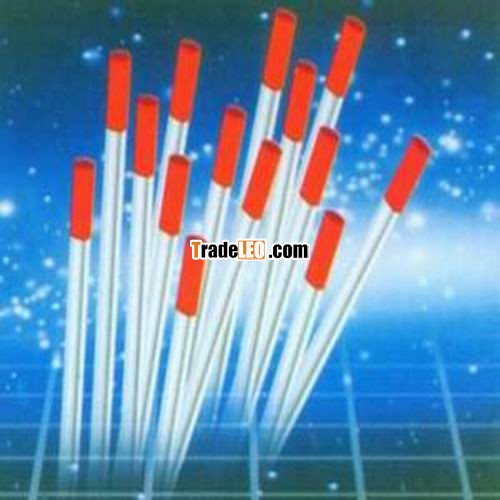
Thoriated electrode(WT20)
2% thoriated tungsten contains a nominal 2wt-% or thorium oxide (ThO2) that
is evenly dispersed throughout the entire length of the tungsten. The most common
type of tungsten used today. Provides excellent resistance from weld pool contamination while at the same time offers the welder easier arc starting capabilities
and a more stable arc. Generally used for DC electrode negative or straight
polarity applications such as carbon and stainless steels, nickel alloys and titanium
| ||||||||||||||||||||||||||||||||||
Ceriated Tungsten Electrode(WC20)
2% ceriated tungsten contains a nominal 2wt-% of cerium oxide (CeO2). Ceriated is different from thoriated as it is not a radioactive material. Ceriated tungsten also tends to last longer than thoriated and can be used proficiently with AC or DC. In manual applications, the ceriated tungsten will provide slightly different electrical characteristics than the thoriated tungsten but generally no difference will be seen by the operator. Generally used to weld carbon and stainless steel, nickel alloy and titanium
| ||||||||||||||||
Pure Tungsten electrodes(WP)
Pure tungsten contains a minimum of 99.5% tungsten with no other alloying elements.
This allows the tip to form a clean, balled end which provides good arc stability on AC. It is generally used in the welding of aluminum and magnesium alloys (AC)
| ||||||||||||||||
Lanthanated tungsten electrodes:
Lanthanated tungsten electrode attracts close attention and becomes popular in international welding area for its unique welding performance; it is easy to use under AC or DC conditions; lanthanated electrodes operate at a slightly different arc voltage than thoriated or ceriated electrodes; developed around the same time as ceriated tungsten to help combat the increasing awareness of the radioactivity of thoriated tungsten; generally used to weld carbon and stainless steels, nickel alloys and titanium
| ||||||||||||||||||||||||||||

