

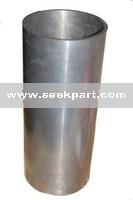
Brand:Zhengtong
Model:116mm*105mm*271mm
A brief description of each of these bearing materials
CARBON-GRAPHITE
These are materials manufactured from a blending of Carbon and
Graphite powders with a hydrocarbon binder. The result is a materials which is resistant to wear, chemically resistant and thermally stable. There are many grades of Carbon-Graphite bearing materials. The shaft journal treatments M-2, M-3 or NCB can be used with type B bearings although it is not
necessary. Journal treatment will extend the life of the shaft since it will resist abrasion if the bearings run dry or are exposed to abrasive particles. See Engineering data sheet 26E for more informationconcerning shaft coatings.
when a bearing wear detector is used,the maximum fluid temperature for a sleeved, bearing is 400°F.
SILICON CARBIDE
- This material is a self sintered, high density hardened material with very good wear and chemical resistance. Silicon carbide is very wear resistance but care must be taken when applying this material because silicon carbide is brittle making it susceptible to thermal and mechanical shock. This type of bearing is much less forgiving than carbon graphite when system upsets, such as dry running and cavitation, occur. Silicon graphite bearings do not wear gradually. If the bearings fail they normally shatter into many pieces causing a catastrophic failure. CARBON-GRAPHITE - This is a grade of Carbon-Graphite which is used primarily in
Hydrofluoric Acid service. Experience has shown that the binder of the carbon graphite type B
bearings is attacked by hydrofluoric acid causing the bearing to swell and seize on the shaft. The type
F-2 graphite composition is inert to hydrofluoric acid attack.
This grade can be used on other applications, but most are covered by the Type B bearing which is less expensive and more readily available.
run dry or are exposed to abrasive particles. See Engineering data sheet 26E for more information
concerning shaft coatings.
Aluminum Oxide
- This material is very similar to silicon carbide with regard to wear and chemical resistance. Aluminum oxide is also very susceptible to thermal and mechanical shock.
The standard bearing used is a Carbon-Graphite
1.compound which has excellent corrosion resistant characteristics when operating in most liquid environments.


